
10+ Biblically Accurate Lucifer: What Scripture Actually Says (2026 Guide)
Picture Lucifer, and most of us see the same thing: red skin, curling horns, a pitchfork, a menacing grin. He shows up in horror movies, Halloween costumes, and a thousand pieces of medieval art. He has become almost cartoonish.
Here is the uncomfortable truth: almost none of that is in the Bible. Not the red skin. Not the horns. Not the pitchfork. Not even — technically — the name “Lucifer” as a proper name.
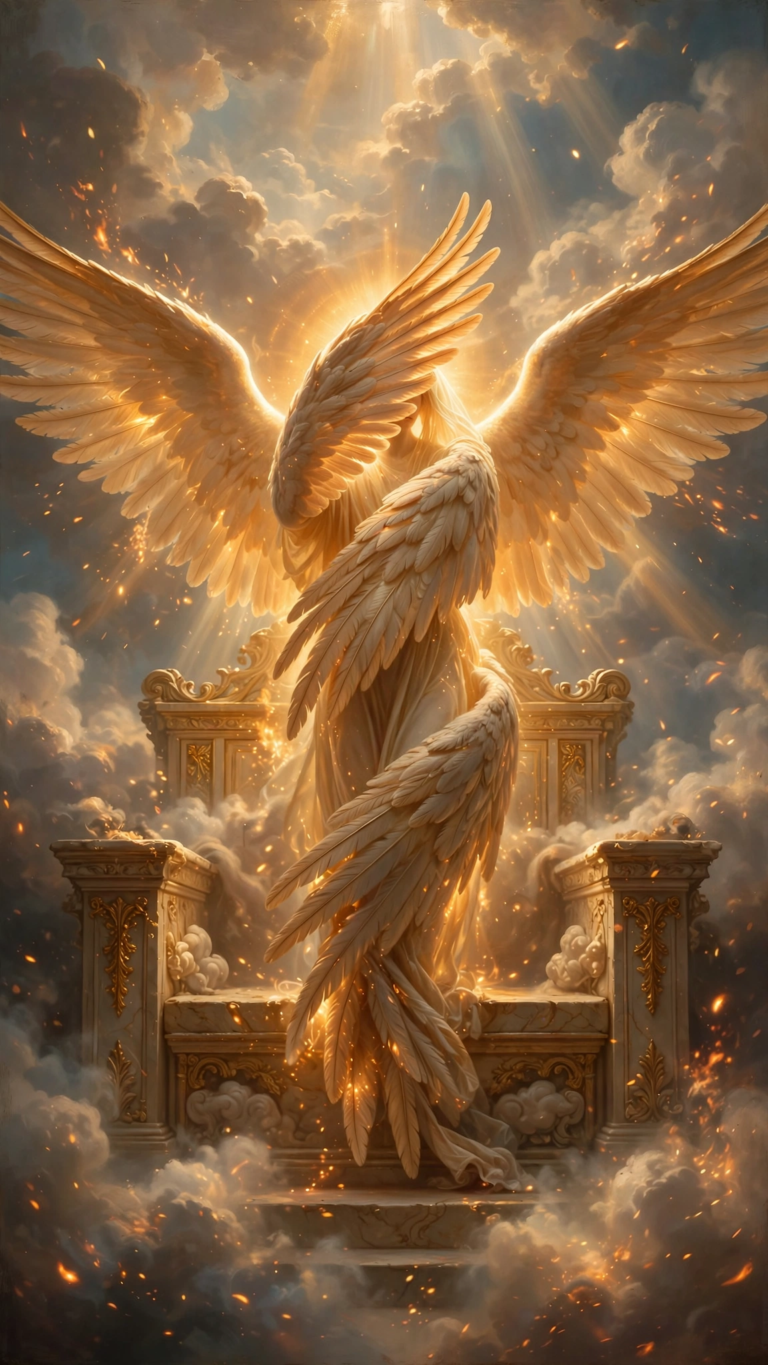
What Scripture actually describes is stranger, more beautiful, and honestly more terrifying than any of the cultural myths we inherited. The biblically accurate Lucifer is a being of breathtaking glory — “the seal of perfection,” full of wisdom, perfect in beauty, an anointed guardian cherub who walked among fiery stones on God’s holy mountain. And then he made a choice. Five words: I will. I will. I will.
This guide digs into what the Bible actually says — the original Hebrew, the theological debates, the composite picture built across Isaiah, Ezekiel, and Revelation — and separates it from centuries of artistic and literary embellishment.
Quick Answer: Who Is Lucifer According to the Bible?
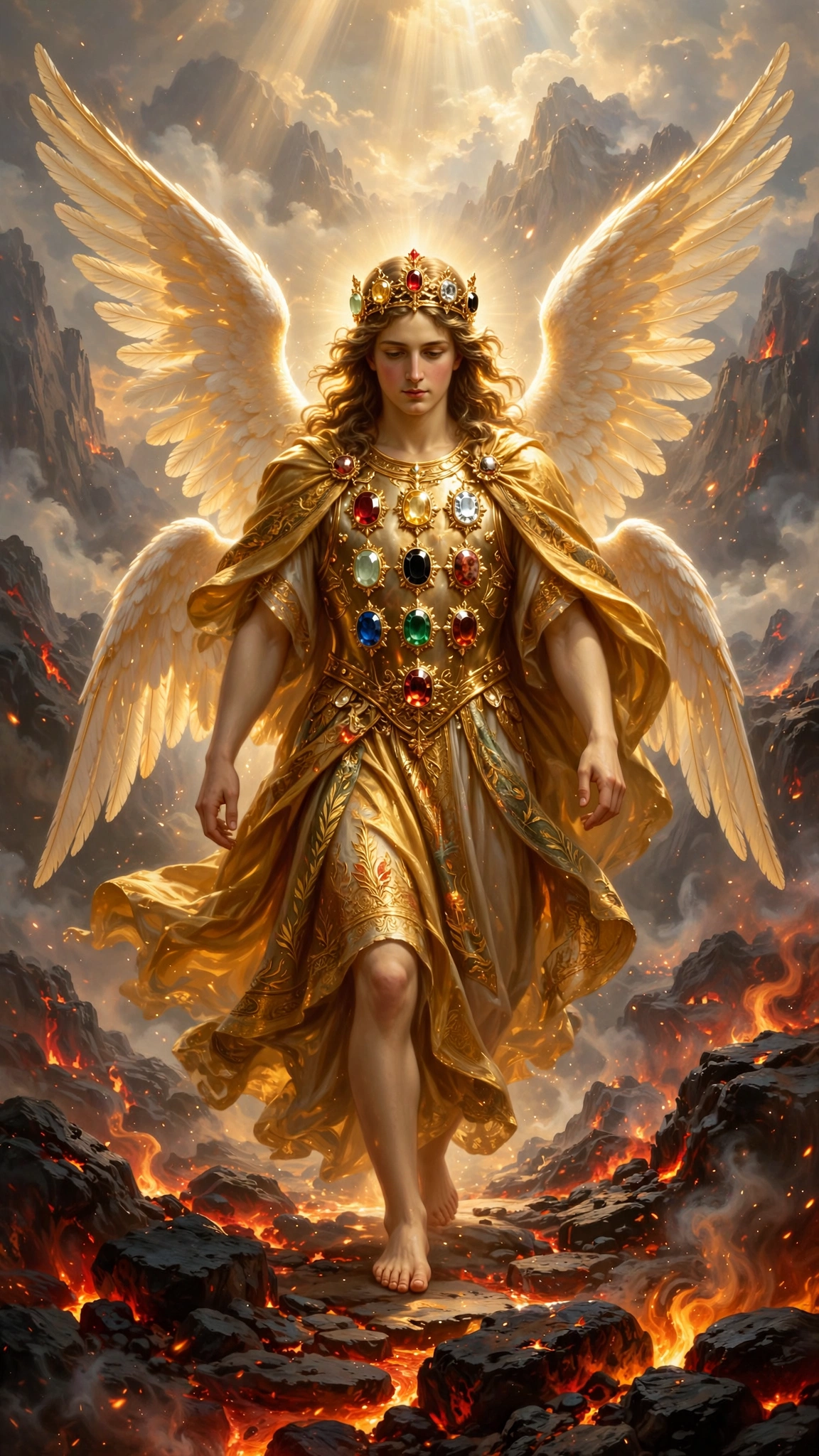
In the traditional Christian understanding, “Lucifer” describes the glorious being Satan was before his fall: a shining, perfect, high-ranking cherub whose pride led him to rebel against God (Isaiah 14:12-15; Ezekiel 28:12-17). The word itself appears only once in most English Bibles (Isaiah 14:12, KJV), where it translates the Hebrew helel — “shining one” or “morning star.” After his rebellion, Scripture knows him by other names: Satan (adversary), the devil (slanderer), the serpent, the dragon.
The Name “Lucifer”: A Translation Problem That Changed Everything
Let us start at the very beginning, because the word “Lucifer” itself is the source of enormous confusion.
The word appears in the Bible exactly once — Isaiah 14:12 — and it is a Latin term, lucifer, meaning “light-bringer” or “morning star.” It entered the Bible through Jerome’s 4th-century Latin translation, the Vulgate, where he used it to translate the Hebrew phrase helel ben shahar — “shining one, son of the dawn.”
So we are dealing with a translation of a translation. The King James translators inherited Jerome’s Latin and rendered it into English as the proper name “Lucifer,” which is what most English-speaking Christians grew up reading. But the underlying Hebrew does not use a name at all.
The Hebrew term helel appears nowhere else in the Old Testament. Most scholars understand it as a reference to Venus — the “morning star,” that exceptionally bright point in the pre-dawn sky, one of the last lights to be washed out by the rising sun.
Think about that imagery for a second. The morning star shines brilliantly before dawn. In that dark hour, it can seem like the brightest thing in the sky. And then the sun rises — and the morning star vanishes into insignificance. That is the metaphor Isaiah is deploying against a fallen, arrogant power. It is far more poetically devastating than any red devil with a pitchfork.
Why Modern Translations Changed It
Most modern translations — NIV, ESV, NASB, NRSV — translate the Hebrew helel as “morning star,” “day star,” or “shining one,” which more accurately conveys the original meaning. Modern translators prefer giving the meaning rather than perpetuating a Latin term that English readers might misunderstand as a proper name.
The New King James Version kept “Lucifer” for continuity with the KJV tradition. Some defenders argue this is actually clearer, since “morning star” is also a title Jesus applies to Himself in Revelation 22:16 — and that is a fair point, and the source of genuine scholarly debate. But linguistically, “Lucifer” as a name for a specific being is more a product of tradition than of the original Hebrew text.
10 Things Scripture Actually Says About Lucifer
1. He Was the “Seal of Perfection”
The most detailed portrait of this being comes from Ezekiel 28, addressed on the surface to the king of Tyre but written in language that soars far beyond any mortal ruler:
“Thou sealest up the sum, full of wisdom, and perfect in beauty.” (Ezekiel 28:12)
Most theologians read this as a dual-reference prophecy — speaking to a human king on the surface while pointing to a cosmic reality beneath. The language simply goes beyond anything that could describe a mortal man.
2. He Was Covered in Precious Stones and Set in Gold
Ezekiel continues: “Thou hast been in Eden the garden of God; every precious stone was thy covering” (Ezekiel 28:13). The passage lists sardius, topaz, diamond, beryl, onyx, jasper, sapphire, emerald, and carbuncle — nine gemstones set in gold.
Let that sink in. This is not a monster. This is a being adorned with jewels, shining and radiant. Whatever Lucifer was before the fall, “ugly” and “grotesque” are the opposite of the biblical picture.
3. He Was an Anointed Guardian Cherub
“Thou art the anointed cherub that covereth… thou wast upon the holy mountain of God; thou hast walked up and down in the midst of the stones of fire.” (Ezekiel 28:14)
Remember what cherubim are: the fearsome guardians of God’s holiness, the four-faced beings of Ezekiel’s visions. To be an anointed guardian cherub is to stand in the highest tier of the angelic order — positioned closer to God’s throne than almost anything else in creation.
4. He Was Created Perfect — and Chose to Fall
“Thou wast perfect in thy ways from the day that thou wast created, till iniquity was found in thee.” (Ezekiel 28:15)
This is the most theologically disturbing line in the whole portrait. He was not made flawed. He was not destined to fail. He was genuinely perfect — and he made a genuine choice. The fall was not fate. It was a decision.
5. His Heart Was Lifted Up Because of His Beauty
Ezekiel names the poison: “Thine heart was lifted up because of thy beauty, thou hast corrupted thy wisdom by reason of thy brightness” (Ezekiel 28:17).
Pride. Not jealousy of humans — the text never says that. Not some external temptation. His own splendor became his snare. The gifts God gave him became the reason he reached for God’s place.
6. He Said “I Will” Five Times
Isaiah 14 records the most famous declaration of pride in all of Scripture. Five times, this being declares “I will”:
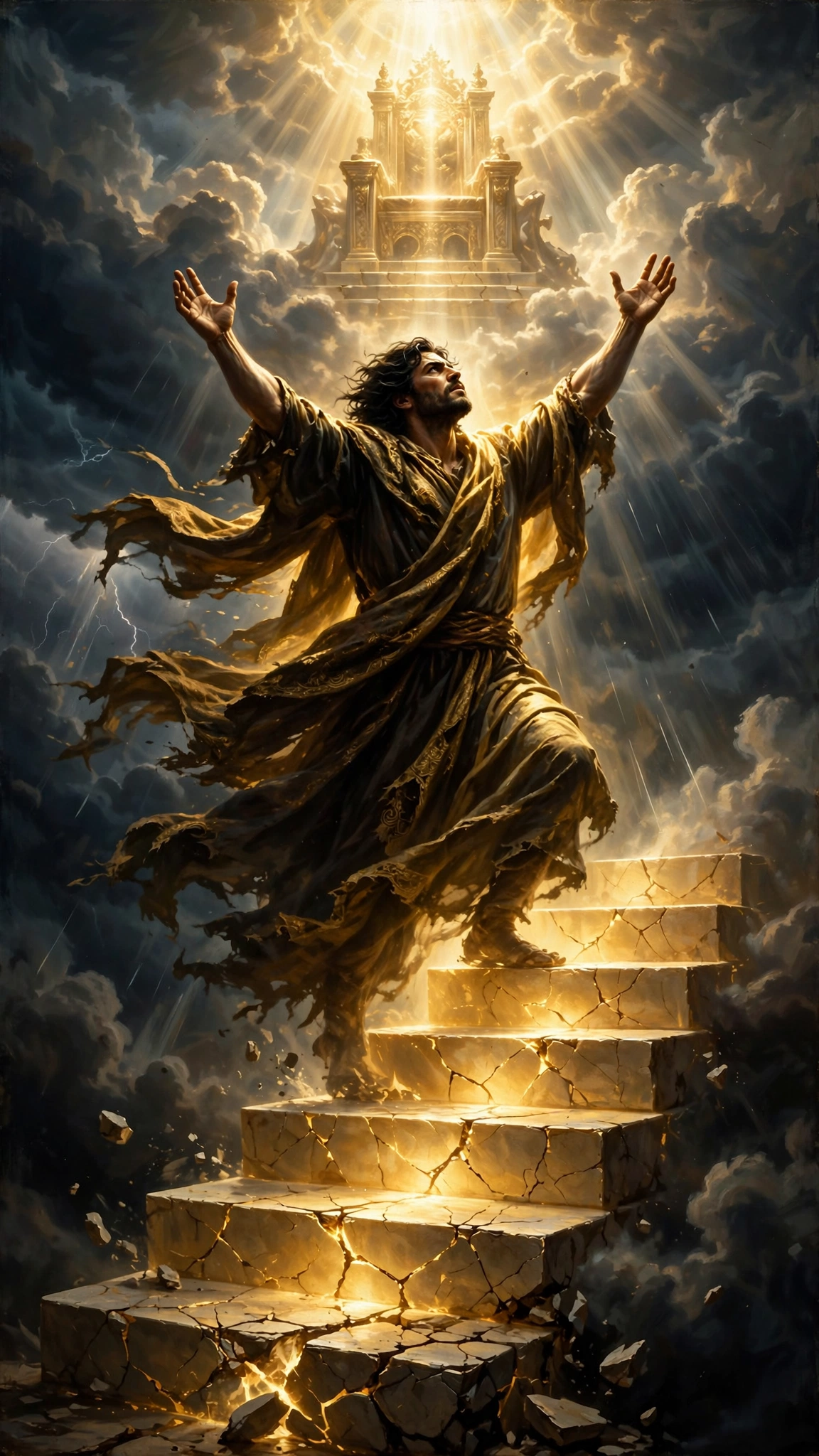
“For thou hast said in thine heart, I will ascend into heaven, I will exalt my throne above the stars of God: I will sit also upon the mount of the congregation, in the sides of the north: I will ascend above the heights of the clouds; I will be like the most High.” (Isaiah 14:13-14)
Notice the progression. It is not mere ambition — it is systematic, deliberate self-deification. Each “I will” builds on the last, until the final one names the goal outright: to be like the Most High.
7. Five Ascents Earned One Devastating Descent
The contrast Isaiah draws is crushing. Five declarations of ascending — and one swift verdict:
“Yet thou shalt be brought down to hell, to the sides of the pit.” (Isaiah 14:15)
Five “I wills” upward; one fall downward. Scripture’s math on pride is always the same: “Pride goeth before destruction, and an haughty spirit before a fall” (Proverbs 16:18).
8. Jesus Said He Saw the Fall Happen
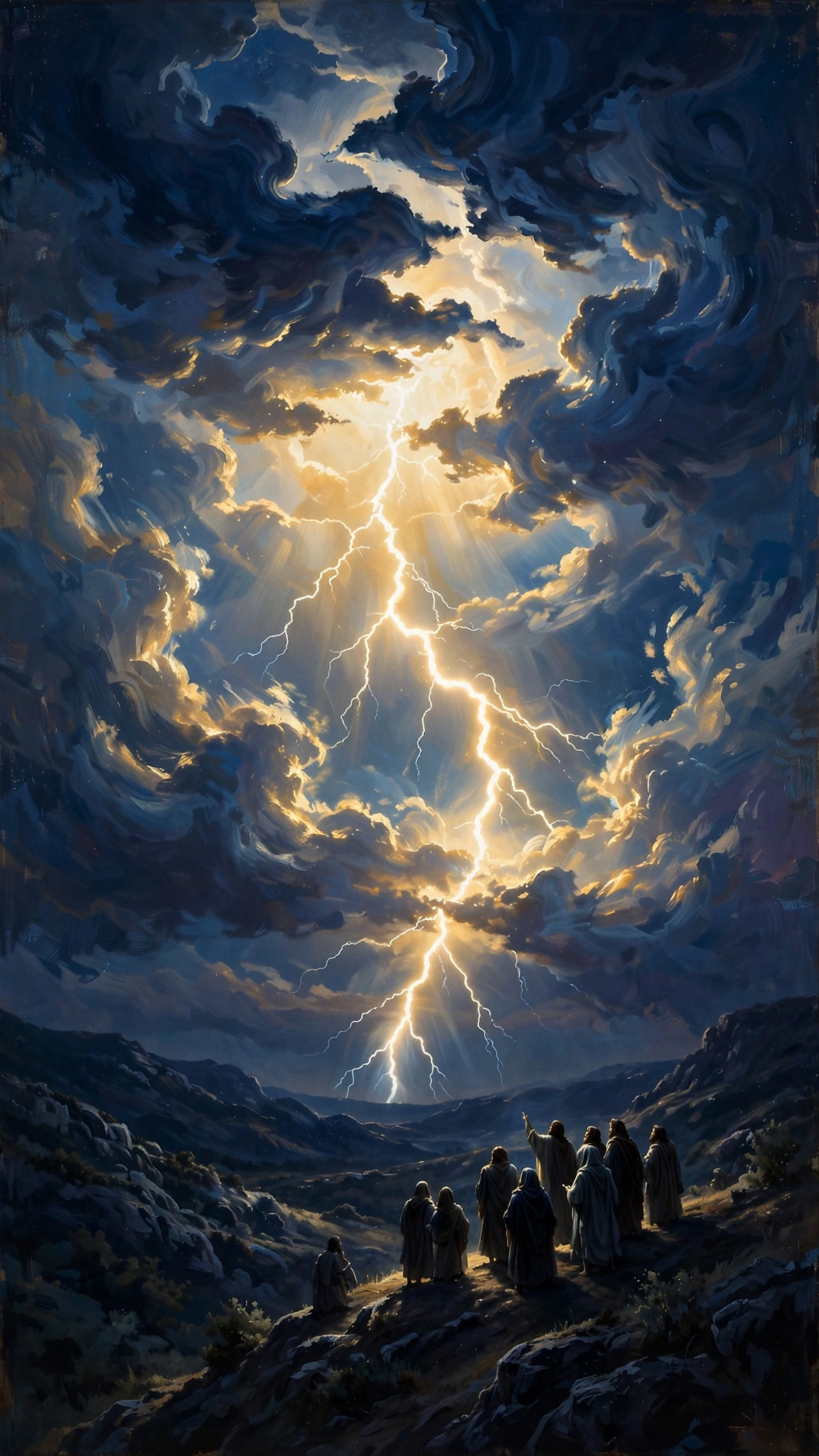
The New Testament gives the story connective tissue. When the seventy disciples return rejoicing that demons submitted to them, Jesus says: “I beheld Satan as lightning fall from heaven.” (Luke 10:18)
Whether Jesus is describing something He witnessed before His incarnation or speaking symbolically of the disciples’ ministry, the verse ties the “Satan” of the Gospels to a real, historical fall from heaven — the same event Isaiah and Ezekiel describe in poetry.
9. Revelation Shows the War — and the Outcome
Revelation 12 describes the cosmic conflict in apocalyptic imagery: “And the great dragon was cast out, that old serpent, called the Devil, and Satan, which deceiveth the whole world: he was cast out into the earth, and his angels were cast out with him.” (Revelation 12:9)
Interpreters debate whether this describes the original fall, a later heavenly battle, or an end-times event. But the outcome is not debated: the dragon loses. And Revelation 20:10 gives the final sentence — the devil cast into the lake of fire. The being who said “I will ascend” ends in the pit.
10. After the Fall, Scripture Never Describes His Appearance Again
Here is a fact most people miss: the Bible gives no physical description of Lucifer after his fall. As a spirit being, he appears to have no fixed form at all. What Scripture does tell us is far more unsettling than horns: “Satan himself is transformed into an angel of light” (2 Corinthians 11:14).
The fallen Lucifer does not advertise himself as a monster. He disguises himself as something beautiful, wise, spiritual — even good. That is what makes him dangerous.
Isaiah 14: King of Babylon or Fallen Angel?

This is where honest scholars genuinely diverge, and it is worth being straight about it.
On the surface, Isaiah 14 is a taunt song — a prophetic victory anthem Israel was to sing over the fallen king of Babylon. Read strictly in context, “How art thou fallen from heaven, O Lucifer, son of the morning!” is a mocking metaphor aimed at a mortal tyrant who claimed divine status and ended in a shameful grave (“they that see thee shall narrowly look upon thee… Is this the man that made the earth to tremble?” — Isaiah 14:16, paraphrased).
Reformers like John Calvin and Martin Luther held this line firmly: Isaiah 14 is about a human king, using cosmic imagery the way ancient poetry often did.
But beginning with early church fathers like Origen, most of Christian tradition has read the passage as dual-reference — a human king on the surface, a fallen angel beneath it. The argument: the language of ascending above the stars of God and sitting on the mount of the congregation goes beyond anything a Babylonian king could literally attempt, and the New Testament’s own references (Luke 10:18; Revelation 12) supply the missing link.
Most evangelical and Catholic theologians hold this composite view today. But it is a theological construction built across multiple texts — Isaiah, Ezekiel, Luke, Revelation — not a single explicit verse. Knowing that does not weaken the doctrine; it just means we should hold it with the humility Scripture itself models.
Lucifer vs. Satan: Are They the Same Being?

This question comes up constantly, and the answer is more nuanced than most people realize.
Strictly speaking, the Bible never explicitly equates “Lucifer” and “Satan.” “Lucifer” appears once (Isaiah 14:12, KJV), in a passage addressed to the king of Babylon. “Satan” — Hebrew for “adversary” or “accuser” — appears throughout both Testaments as the great opponent of God and His people.
The traditional understanding, held by most mainstream Christian denominations, is that they are the same being at different stages of one story. Lucifer describes what he was before the fall — the shining one, the seal of perfection. Satan describes what he became after it — the adversary, the accuser, the deceiver. The fall changed his name because it changed his nature.
There is a minority scholarly view that sees “Lucifer” purely as a poetic metaphor for the Babylonian king’s arrogance — on this reading, there is no fallen angel named Lucifer at all, just cosmic poetry about human pride.
The simplest way to hold the traditional view: if it is correct, Lucifer is a description of what he was, and Satan is the name of what he became.
The Morning Star Paradox: Why Jesus Uses the Same Title
This one genuinely trips people up. In Revelation 22:16, Jesus says: “I am the root and the offspring of David, and the bright and morning star.” So why would both Jesus and the fallen Lucifer be associated with the “morning star”?
The answer is that “morning star” is not a name — it is a description. The morning star is Venus, brilliant in the pre-dawn sky: an image of radiant, light-bearing glory. That image does not belong exclusively to one being.
Jesus claims the title in its fullest and truest sense, as the true light of the world. The “morning star” imagery for Lucifer describes him in his former, unfallen state — what he was before his rebellion: a reflection of created glory, not the source of it.
Some theologians go further and see intentional irony. The being who grasped at divine glory through pride lost everything. The Being who actually is divine humbled Himself, took on flesh, died, and was raised. One grasped for glory; the other laid it down. And the morning star title ultimately belongs to the One who laid it down.
When Did the Fall Happen?
Here is a surprise for many people: the Bible does not give us a clear timeline.
Nowhere does Scripture say, “On day three of creation week, Lucifer fell.” The fall is described in poetic and apocalyptic language, not chronological narrative. What we can piece together:
- The fall appears to predate human history, since a tempter is already present in Eden (Genesis 3).
- Revelation 12 describes a war in heaven and the dragon’s expulsion, though interpreters debate whether this depicts the original fall or an end-times event.
- Jesus’ statement in Luke 10:18 — “I beheld Satan as lightning fall from heaven” — suggests an event He personally witnessed, though whether past or symbolic is debated.
What Scripture makes unmistakably clear is not the when but the why: pride, the desire to be like the Most High, turned the seal of perfection into the adversary.
8 Myths About Lucifer the Bible Doesn’t Teach
Myth 1: Lucifer rules hell. The Bible never teaches this. Revelation describes the devil being cast into the lake of fire (Revelation 20:10) — he is hell’s prisoner, not its king. The image of Satan on a dark throne comes from Dante and Milton, not Scripture. “Depart from me, ye cursed, into everlasting fire, prepared for the devil and his angels” (Matthew 25:41) — hell was prepared for him, not by him.
Myth 2: Lucifer has horns, a tail, and a pitchfork. Zero biblical basis. Medieval European art, influenced by depictions of pagan gods like Pan, created this image. It is culturally sticky but theologically empty.
Myth 3: Lucifer fell because he was jealous of humans. Some church fathers proposed this, but it is not in the biblical text. Isaiah attributes the fall to pride and the desire to be like God. Humans are never mentioned as the motive.
Myth 4: “Lucifer” is Satan’s original personal name. The Hebrew text never uses it as a name — it is Jerome’s Latin translation of helel, “shining one.” Even as a Latin word, lucifer appears positively elsewhere in the Vulgate (the “day star” of 2 Peter 1:19). It became a proper name through centuries of tradition, not through the original text.
Myth 5: Lucifer is God’s equal and opposite. This is dualism, and the Bible rejects it completely. Lucifer was a created being — “from the day that thou wast created” (Ezekiel 28:15). He is finite, limited, and already defeated. There is no cosmic stalemate; there is a sovereign God and a judged rebel.
Myth 6: Lucifer tempted Eve as a beautiful angel. Scripture identifies the Eden tempter as a serpent (Genesis 3:1), and Revelation later calls Satan “that old serpent” (Revelation 12:9). The Bible never describes what form, if any, he took beyond the serpent — and it never says Eve saw a glorious angel.
Myth 7: Lucifer can be redeemed. Scripture offers no such hope. His judgment is pronounced and final (Isaiah 14:15; Revelation 20:10). The gospel is good news for fallen humans, not for fallen angels (Hebrews 2:16).
Myth 8: Talking about Lucifer gives him power. Studying what Scripture says about the enemy is not worship of the enemy. Paul wrote frankly about Satan’s schemes so believers would not be ignorant of them (2 Corinthians 2:11). Truth about darkness serves the light.
10 Key Bible Verses About Lucifer and the Fall
- “How art thou fallen from heaven, O Lucifer, son of the morning! how art thou cut down to the ground, which didst weaken the nations!” — Isaiah 14:12
- “I will ascend into heaven, I will exalt my throne above the stars of God… I will be like the most High.” — Isaiah 14:13-14
- “Yet thou shalt be brought down to hell, to the sides of the pit.” — Isaiah 14:15
- “Thou sealest up the sum, full of wisdom, and perfect in beauty.” — Ezekiel 28:12
- “Thou art the anointed cherub that covereth.” — Ezekiel 28:14
- “Thou wast perfect in thy ways from the day that thou wast created, till iniquity was found in thee.” — Ezekiel 28:15
- “Thine heart was lifted up because of thy beauty.” — Ezekiel 28:17
- “I beheld Satan as lightning fall from heaven.” — Luke 10:18
- “Satan himself is transformed into an angel of light.” — 2 Corinthians 11:14
- “I am… the bright and morning star.” — Revelation 22:16 (Jesus, the true Morning Star)
FAQs About Biblically Accurate Lucifer
Is Lucifer actually mentioned in the Bible?
The word “Lucifer” appears once in the King James Version, at Isaiah 14:12, where it translates the Hebrew helel (“shining one”). Modern translations usually render it “morning star” or “day star.” The being it describes is traditionally identified with Satan before his fall.
Is Lucifer the same as Satan?
In traditional Christian understanding, yes — they are the same being at different stages. “Lucifer” (the shining one) describes what he was before the fall; “Satan” (the adversary) describes what he became after it. The Bible never states this identity in a single verse; it is built from Isaiah 14, Ezekiel 28, Luke 10:18, and Revelation 12 read together.
What does the name Lucifer mean?
“Lucifer” is Latin for “light-bringer” or “morning star.” It was Jerome’s 4th-century Latin translation of the Hebrew helel in Isaiah 14:12. It was originally a description, not a personal name.
Why did Lucifer fall from heaven?
According to Scripture, pride. Ezekiel says his heart was lifted up because of his beauty (Ezekiel 28:17); Isaiah records his five “I will” declarations of self-exaltation, climaxing in “I will be like the most High” (Isaiah 14:14). He wanted God’s place.
Why is Jesus also called the morning star if Lucifer was the morning star?
“Morning star” is a description of radiant glory, not a personal name. Jesus claims it in its truest sense as the genuine light (Revelation 22:16). Applied to Lucifer, it describes his former, created glory before rebellion — a reflection of light, not its source.
Conclusion
The biblically accurate Lucifer is not a red cartoon villain. He is something far more sobering: the most beautiful creature God ever made, who looked at his own glory and reached for God’s throne — and fell. His story is Scripture’s definitive warning about pride, and its definitive proof that no one, however exalted, is beyond the reach of judgment.
But his story is not the end of the story. The same Bible that records his fall records his defeat: disarmed at the cross (Colossians 2:15), destined for the lake of fire (Revelation 20:10), already a conquered foe. And the true Morning Star — Jesus — shines with a light no rebellion can dim.
If Lucifer’s story teaches us anything, it is this: never worship the shine. Worship the Source.
Related Reading
- Biblically accurate Satan — the adversary after the fall: the serpent, the tempter, the accuser, and what Scripture says about his work today. (Anchor: “the adversary after the fall” → destination topic: Biblically Accurate Satan)
- Biblically accurate angel — seraphim, cherubim, and the wheels of eyes: what angels really look like in Scripture. (Anchor: “what angels really look like in Scripture” → destination topic: Biblically Accurate Angel)
- What does the Bible say about pride? — the sin that felled Lucifer, and the humility God honors instead. (Anchor: “the sin that felled Lucifer” → destination topic: Pride in the Bible)