10+ Biblically Accurate Angel: Surprising Facts About Angels in Scripture (2026 Guide)
If you have ever scrolled past one of those viral images — a spinning wheel covered in eyes, a six-winged creature blazing with light — and wondered whether that is really what the Bible describes, you are not alone. The phrase “biblically accurate angel” has taken over the internet, and it has left a lot of people asking a sincere question: what do angels actually look like according to Scripture?
The short answer might surprise you. Some biblical angels do look strange and overwhelming, exactly the way the artwork suggests. But others look so ordinary that people in the Bible mistook them for travelers, neighbors, and friends. The truth is richer than any single image.
This guide walks through what the Bible actually says about angels — the awe-inspiring visions, the quiet human-like messengers, the famous names, and the myths that grew up around them. Everything here comes straight from Scripture, with real verses you can look up yourself.
What Does “Biblically Accurate Angel” Mean?
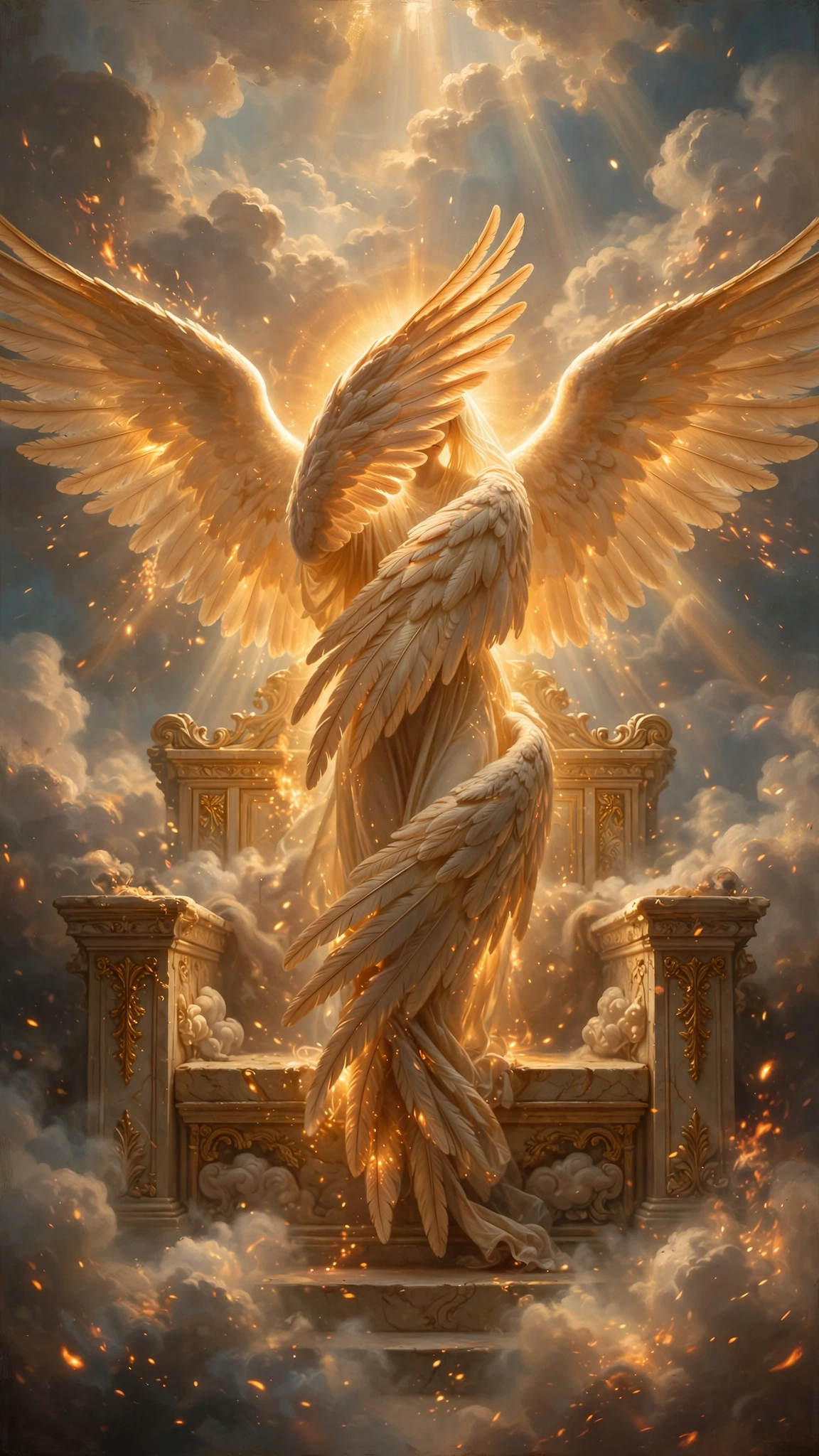
The term “biblically accurate angel” started as internet shorthand for angels drawn the way Scripture describes them, instead of the way Renaissance art imagined them. Think less of a gentle figure in a white robe with a golden halo, and more of the prophet Ezekiel’s vision: living creatures with four faces and wings, and wheels within wheels covered in eyes.
The phrase became popular because people were genuinely startled to discover that the Bible’s descriptions of heavenly beings are wild, vivid, and sometimes frightening. Memes and digital art ran with the most dramatic passages — Isaiah’s six-winged seraphim, Ezekiel’s eye-covered wheels — and presented them as the “real” angels.
Here is what the trend gets right: Scripture really does describe some angels in ways that look nothing like modern art. The seraphim of Isaiah 6 and the living creatures of Ezekiel 1 are genuinely strange, overwhelming, and glorious. Those images come from the Bible, not from someone’s imagination.
Here is what the trend gets wrong: it treats one kind of angelic being as the only kind. The Bible describes several different types of angels, and many of them appear simply as men — so human-looking that Abraham served them dinner and the author of Hebrews could write that some people have “entertained angels unawares” (Hebrews 13:2). A truly biblically accurate picture of angels has to include both the wheels of fire and the quiet stranger at the door.
10 Surprising Facts About Angels in Scripture

1. Seraphim Have Six Wings — and Use Most of Them to Hide
The most famous “biblically accurate angel” image comes from Isaiah’s vision of God’s throne. Isaiah writes:
“Above it stood the seraphims: each one had six wings; with twain he covered his face, and with twain he covered his feet, and with twain he did fly.” (Isaiah 6:2)
Notice what is happening. These are not wings for showing off. Four of the six wings are used to cover — the face out of reverence before God’s holiness, the feet out of humility. Only two are used for flying. Even the highest angels veil themselves in the presence of God. And their endless cry fills the temple: “Holy, holy, holy, is the LORD of hosts: the whole earth is full of his glory.” (Isaiah 6:3)
The word “seraphim” is connected to burning or fire. These are blazing, radiant beings whose entire existence is worship.
2. Some Angels Have Four Faces at Once
Ezekiel’s vision by the river Chebar introduces the “living creatures,” and their description is one of the strangest passages in all of Scripture:
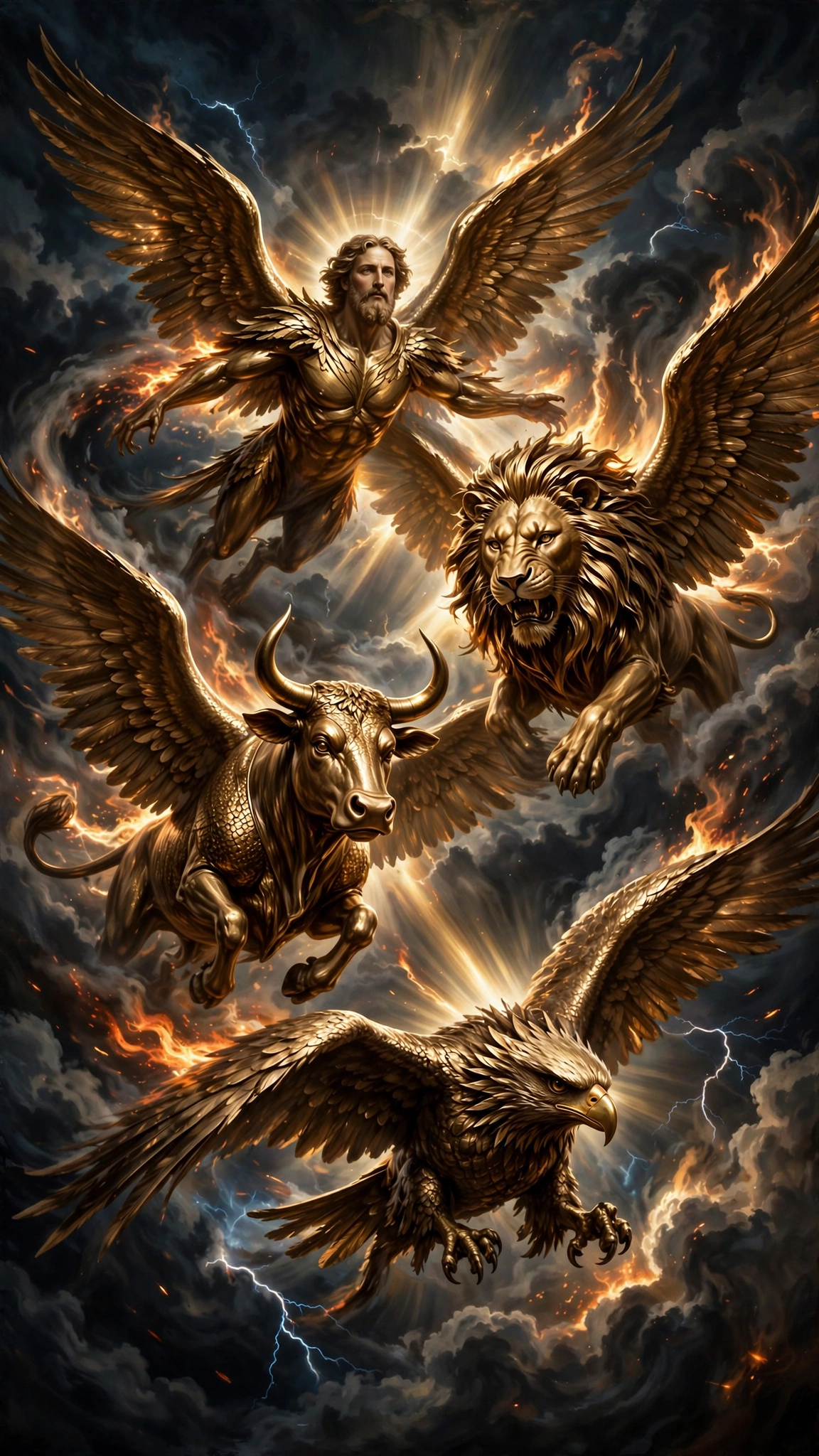
“As for the likeness of their faces, they four had the face of a man, and the face of a lion, on the right side: and they four had the face of an ox on the left side; they four also had the face of an eagle.” (Ezekiel 1:10)
Each creature also had four wings and moved without turning, going straight forward wherever the Spirit directed. For centuries, readers have seen meaning in the four faces: humanity, wild strength, patient service, and soaring transcendence — a picture of creation itself turned toward its Creator. Whether or not you accept that symbolism, the text is clear that these beings are designed to inspire awe, not comfort.
3. The “Wheels Within Wheels” Are Covered in Eyes
The single most viral image — the spinning wheel covered in eyes — comes from Ezekiel 1 as well. Beside each living creature, Ezekiel saw a wheel:
“The appearance of the wheels and their work was like unto the colour of a beryl: and they four had one likeness: and their appearance and their work was as it were a wheel in the middle of a wheel.” (Ezekiel 1:16)
And then the detail that launched a thousand artworks: “As for their rings, they were so high that they were dreadful; and their rings were full of eyes round about them four.” (Ezekiel 1:18)
These wheels — called the ophanim, later associated with the angelic order of “thrones” — move in perfect unity with the living creatures, sparkling like precious stone. They are part of the chariot-throne of God, a vision of divine mobility: God is never stuck, never limited, never absent.
4. Cherubim Are Fearsome Guardians, Not Baby Angels
Somewhere along the way, “cherub” came to mean a chubby, rosy-cheeked baby with tiny wings on a Valentine’s card. The biblical cherubim are nothing like that.
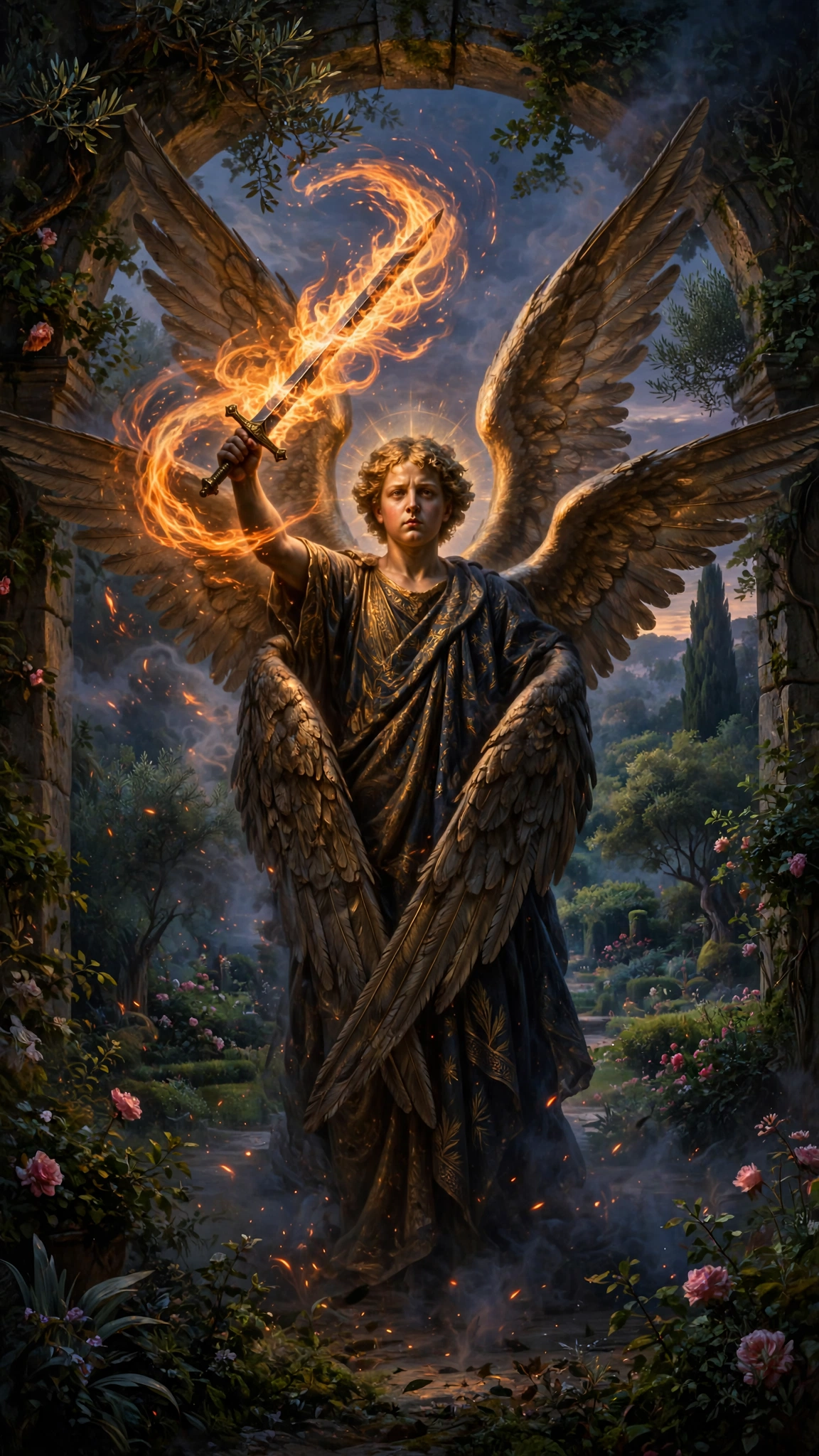
After Adam and Eve were driven from the garden, “he placed at the east of the garden of Eden Cherubims, and a flaming sword which turned every way, to keep the way of the tree of life.” (Genesis 3:24)
Cherubim guard what is holy. They appear again in Ezekiel’s visions as powerful, multi-winged beings surrounding God’s throne, and their likenesses were woven into the curtains of the tabernacle and carved over the ark of the covenant. In Scripture, you do not cuddle a cherub — you tremble before one.
5. Many Angels Look Like Ordinary Men
Here is the part the viral images leave out. When angels come as messengers, they usually look like people. Abraham looked up and saw “three men” standing near his tent (Genesis 18:2) — and only gradually realized who his guests were. Daniel calls Gabriel “the man Gabriel” (Daniel 9:21). The two angels who visit Lot in Sodom are described simply as men.
This is why the New Testament can say, “Be not forgetful to entertain strangers: for thereby some have entertained angels unawares.” (Hebrews 13:2)
The Bible’s angels are not always spectacular. Sometimes heaven’s messenger looks like a traveler who needs a meal and a place to rest. That quiet ordinariness is just as biblical as the wheels of fire.
6. Angels Glow — and Terrify the People Who See Them
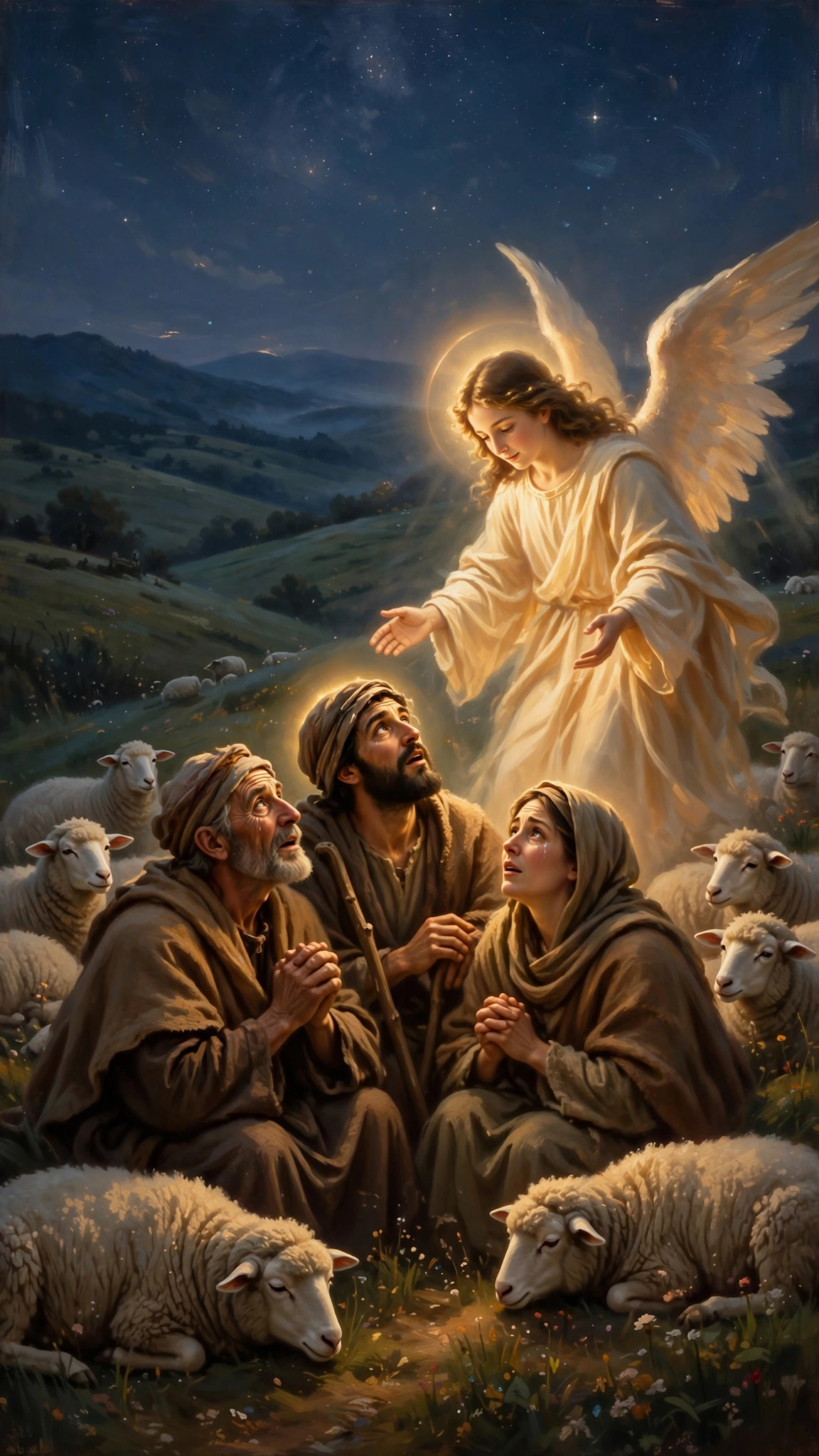
Even the human-looking angels carry an unmistakable glory. At Jesus’ tomb, the angel’s “countenance was like lightning, and his raiment white as snow” (Matthew 28:3) — and the Roman guards shook with fear and “became as dead men.” When an angel appeared to the shepherds, “the glory of the Lord shone round about them: and they were sore afraid” (Luke 2:9).
That is why the most common opening line of an angel in Scripture is some version of “Do not be afraid.” It is not a greeting-card pleasantry. It is triage. People who meet real angels in the Bible routinely collapse, tremble, or fall on their faces. The glory is real, and it is overwhelming.
7. Only Two Angels Are Named in the Entire Bible
For all the names invented by later tradition, Scripture names exactly two angels: Michael and Gabriel.
Michael appears as a warrior and protector — “Michael, one of the chief princes” (Daniel 10:13), the one who leads heaven’s armies when “there was war in heaven: Michael and his angels fought against the dragon” (Revelation 12:7). Jude calls him “Michael the archangel” (Jude 1:9).
Gabriel is the great messenger. He explains visions to Daniel, and he announces the births of John the Baptist and Jesus. To Zechariah he says, “I am Gabriel, that stand in the presence of God” (Luke 1:19). His appearances are tied to the biggest turning points in the story of redemption.
8. Angels Are Spirits — Powerful, but Not All-Powerful
The Bible is careful about what angels are and are not. “Are they not all ministering spirits, sent forth to minister for them who shall be heirs of salvation?” (Hebrews 1:14) They are created beings — magnificent, but created. Colossians 1:16 says that thrones, dominions, principalities, and powers were all created by Christ and for Him.
That means angels are not omnipresent, omniscient, or omnipotent. Only God is. Daniel 10 gives a striking picture: an angel tells Daniel he was delayed twenty-one days by opposition, until Michael came to help him. Heaven’s messengers can be hindered. They are mighty, but they are finite — and they serve at God’s command, not their own.
9. Angels Watch Over God’s People
One of the tenderest truths about angels is also one of the most repeated. “For he shall give his angels charge over thee, to keep thee in all thy ways.” (Psalm 91:11)
Elisha’s servant learned this when he woke to find an enemy army surrounding the city — and Elisha prayed that his eyes would be opened. Suddenly he saw “the mountain was full of horses and chariots of fire round about Elisha” (2 Kings 6:17). The heavenly army had been there all along.
Angels in Scripture protect, guide, rescue, and strengthen. They shut the mouths of lions for Daniel, opened prison doors for Peter, and ministered to Jesus after His temptation in the wilderness and in Gethsemane. Their power is real — but their assignment is service.
10. There Is an Angelic Order — Ranks and Roles
Scripture hints at structure in the heavenly host. There are archangels like Michael (Jude 1:9), seraphim who lead worship around the throne (Isaiah 6), cherubim who guard holiness (Genesis 3:24; Ezekiel 10), and the living creatures and wheels of Ezekiel’s visions. Paul writes of “thrones, or dominions, or principalities, or powers” (Colossians 1:16) as created orders.
Later church tradition organized these hints into nine choirs, but the Bible itself is less systematic. What Scripture emphasizes is not a neat org chart but a truth: heaven is ordered, purposeful, and vast — “thousand thousands ministered unto him, and ten thousand times ten thousand stood before him” (Daniel 7:10).
The Three Great Visions: Seraphim, Cherubim, and the Wheels
It helps to put the three most dramatic biblical visions side by side, because each one reveals a different facet of who God is.
Isaiah 6 — the Seraphim: God’s holiness. Isaiah sees the Lord on a throne, high and lifted up, with six-winged seraphim crying “Holy, holy, holy.” The vision ends with Isaiah’s confession — “Woe is me!” — and his cleansing and calling. The seraphim reveal a God so holy that even sinless angels cover their faces.
Ezekiel 1 and 10 — the Living Creatures, Cherubim, and Wheels: God’s glory and mobility. Ezekiel sees a storm, fire, four living creatures with four faces, and wheels within wheels full of eyes. Above it all is a throne with the likeness of a man. The vision reveals a God whose glory moves — He is not confined to the temple in Jerusalem; He goes with His exiled people to Babylon.
Revelation 4 — the Throne Room: God’s worthiness. John sees a throne surrounded by living creatures covered with eyes, crying “Holy, holy, holy, Lord God Almighty.” The elders fall down and cast their crowns before the throne. The vision reveals a God worthy of endless worship from all creation.
Three visions, one message: God is holy, glorious, and worthy — and His angels exist to declare it.
Not Every Angel Looks Strange: The Human-Like Messengers
It is worth lingering on this, because the internet’s version of angels can make us miss half the Bible’s picture.
Most angelic appearances in Scripture are quiet. Angels walk into Abraham’s camp as travelers. They sit under trees, eat meals, grab Lot by the hand and pull him out of Sodom. They appear to Gideon as he threshes wheat, to Manoah’s wife in a field, to shepherds on an ordinary night shift.
Even Gabriel — the angel who stands in the presence of God — comes to Daniel as “the man Gabriel” and to Mary in a form so human that the Gospels never bother describing anything unusual about his appearance. What unsettles Mary is his message, not his face: “Mary was greatly troubled at his words” (Luke 1:29, paraphrased).
The lesson is simple: do not expect heaven’s messengers to always arrive with special effects. Sometimes they look like the person next to you.
5 Myths About Angels the Bible Doesn’t Teach
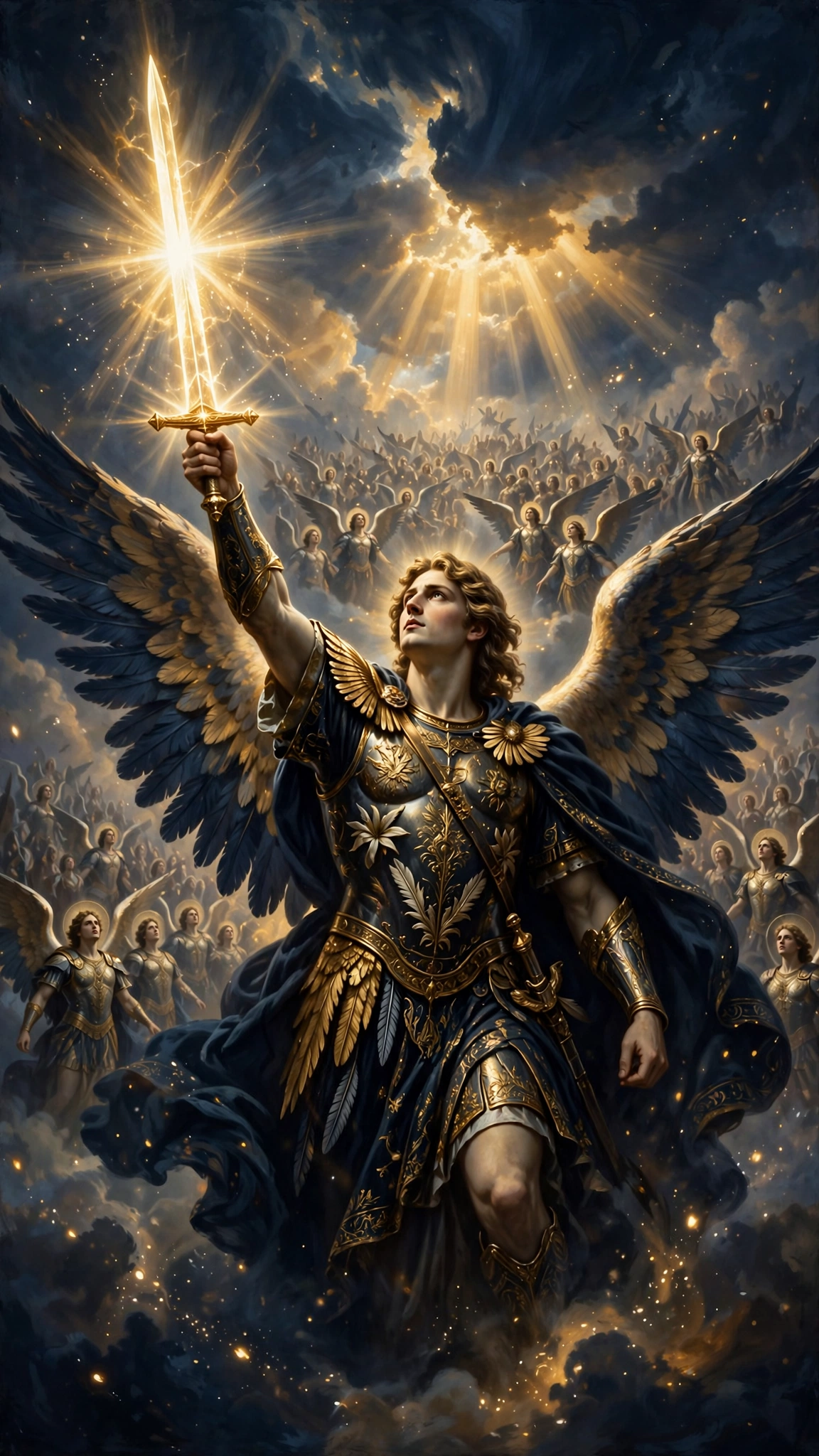
Myth 1: Angels have halos. Halos come from art, not Scripture. No biblical passage describes a glowing ring above an angel’s head. Angels do shine with glory, but the halo as a visual symbol was borrowed from ancient depictions of sun gods and adopted by Christian artists centuries later.
Myth 2: Every angel has wings. Seraphim have six wings; cherubim and the living creatures have wings; but the “men” who visit Abraham, the angel at the tomb, and Gabriel himself are never described as having wings at all. Wings in Scripture belong to specific beings in specific visions — they are not standard angel equipment.
Myth 3: Cherubs are babies. As we saw, biblical cherubim are mighty guardians with multiple faces and wings. The chubby baby “cherub” is a Renaissance invention, borrowed from classical images of Cupid.
Myth 4: People become angels when they die. This is one of the most repeated ideas in popular culture, and it is nowhere in Scripture. Humans and angels are distinct creations. Believers are promised resurrection bodies and a glory of their own — not a promotion to angelhood.
Myth 5: Each person has one personal “guardian angel” assigned at birth. The Bible does teach angelic protection (Psalm 91:11), and Jesus speaks of children’s angels beholding God’s face (Matthew 18:10). But the neat system of one angel per person, assigned for life, is later tradition — not a biblical doctrine.
What Angels Actually Do
Strip away the art and the myths, and Scripture gives angels four great assignments:
They worship. The seraphim never stop crying “Holy, holy, holy.” The living creatures of Revelation rest neither day nor night. Worship is not one of an angel’s jobs — it is the atmosphere they live in.
They carry messages. The Hebrew word malak and the Greek angelos both simply mean “messenger.” From the announcements of Isaac’s and Samson’s births to Gabriel’s world-changing news for Mary, angels are God’s couriers. When God has something to say, angels often carry it.
They protect and serve. Angels shut lions’ mouths, open prison doors, guide travelers, and strengthen the weary. “The angel of the LORD encampeth round about them that fear him, and delivereth them” (Psalm 34:7).
They execute judgment and wage war. Michael leads heaven’s armies against the dragon (Revelation 12:7). Angels struck down armies, carried out plagues, and will accompany Christ at His return. Angels are not only gentle — they are warriors when God commands it.
12 Bible Verses About Angels
On what they look like:
1. “Above it stood the seraphims: each one had six wings.” — Isaiah 6:2
2. “They four had the face of a man, and the face of a lion… the face of an ox… the face of an eagle.” — Ezekiel 1:10
3. “Their rings were full of eyes round about them four.” — Ezekiel 1:18
4. “His countenance was like lightning, and his raiment white as snow.” — Matthew 28:3
On what they do:
5. “Are they not all ministering spirits, sent forth to minister for them who shall be heirs of salvation?” — Hebrews 1:14
6. “For he shall give his angels charge over thee, to keep thee in all thy ways.” — Psalm 91:11
7. “The angel of the LORD encampeth round about them that fear him, and delivereth them.” — Psalm 34:7
8. “Be not forgetful to entertain strangers: for thereby some have entertained angels unawares.” — Hebrews 13:2
On who they serve:
9. “Holy, holy, holy, is the LORD of hosts: the whole earth is full of his glory.” — Isaiah 6:3
10. “And there was war in heaven: Michael and his angels fought against the dragon.” — Revelation 12:7
11. “I am Gabriel, that stand in the presence of God.” — Luke 1:19
12. “Thousand thousands ministered unto him, and ten thousand times ten thousand stood before him.” — Daniel 7:10
FAQs About Biblically Accurate Angels
What does a biblically accurate angel look like?
It depends on the type. Seraphim have six wings (Isaiah 6:2); the living creatures have four faces — man, lion, ox, eagle — and four wings (Ezekiel 1:10-11); the wheels beside them are covered in eyes (Ezekiel 1:18); and many angels simply look like men (Genesis 18:2; Daniel 9:21). There is no single “biblical” look.
Are biblically accurate angels scary?
Often, yes — and that is the point. People who meet angels in Scripture routinely fall down in fear, which is why angels so often begin with “Do not be afraid.” Their appearance reflects the overwhelming holiness and glory of the God they serve.
How many types of angels are in the Bible?
Scripture names several orders: seraphim (Isaiah 6), cherubim (Genesis 3:24; Ezekiel 10), the living creatures and wheels/ophanim (Ezekiel 1), archangels like Michael (Jude 1:9), and the great host of unnamed messenger angels. Paul also mentions thrones, dominions, principalities, and powers (Colossians 1:16).
Do all angels have wings?
No. Wings are described for seraphim, cherubim, and the living creatures in throne visions, but the angels who appear as men — to Abraham, Lot, Daniel, and Mary — are never described as having wings. Wings are not standard equipment for every angel.
Why do angels always say “Do not be afraid”?
Because meeting one is terrifying. Even the human-looking angels radiate a glory that undoes people — guards at the tomb shook and “became as dead men” (Matthew 28:4). The words are reassurance, not small talk: heaven’s messenger is telling you that you are safe.
Conclusion
So what is a biblically accurate angel? It is the six-winged seraph crying “Holy, holy, holy” — and it is also the quiet traveler sharing Abraham’s meal. It is the wheel covered in eyes — and the man named Gabriel standing in an ordinary room in Nazareth. Scripture refuses to give us just one image, because angels are not one thing. They are worshipers, warriors, guardians, and messengers, each appearing as their assignment requires.
The next time you see one of those dramatic images online, enjoy it — but remember the fuller picture. The most biblical thing about angels is not how strange some of them look. It is that all of them, from the blazing seraph to the unnoticed stranger, exist for one purpose: to serve God and to minister to the people He loves.
Related Reading
- Biblically accurate Lucifer — what Scripture says about the most famous fallen angel, and how the beautiful cherub of Ezekiel 28 became the adversary. (Anchor: “what the Bible says about Lucifer” → destination topic: Biblically Accurate Lucifer)
- Biblically accurate Satan — the serpent, the accuser, the deceiver: who Satan is according to the Bible, and the myths Scripture never teaches. (Anchor: “who Satan is according to the Bible” → destination topic: Biblically Accurate Satan)
- What the Bible says about guardian angels — a closer look at Psalm 91, Matthew 18:10, and the promise of angelic protection. (Anchor: “the promise of angelic protection” → destination topic: Guardian Angels in the Bible)